If you work in building in New South Wales, the white card is your ticket onto site. It beings in the same mental pail as your PPE and your trade permit: you are not working without it.
Where people obtain captured is with the expiration policies. They pull an old card from all-time low of the glovebox, or they have a green card from the 2000s, and they are not sure whether it is still appropriate under present legislation.
I train workers on CPCWHS1001 Prepare to function securely in the construction market, and I still see plenty of confusion, even amongst knowledgeable managers and project managers. The regulations have advanced, the system codes have actually transformed, and each state deals with the details a little in a different way.
This guide concentrates on NSW white card expiration regulations, using useful instances and side cases. It additionally touches on interstate and older cards so you can make noise decisions for yourself, your team, or your business.
What the NSW white card actually is
The NSW white card is a "general building induction card," called for under the Job Health and Safety Guideline 2017 for anyone doing construction job. It reveals you have actually finished nationally identified general building and construction induction training, presently based on the system:
CPCWHS1001 - Prepare to function securely in the building and construction industry
Older cards might reference CPCCOHS1001A or CPCCWHS1001. Those are previous versions of the same underlying competency. The card itself is issued by SafeWork NSW, normally after you complete training with an authorized Registered Training Organisation (RTO).
The card is not just for labourers. In NSW, you require a building white card if you:
- physically execute building work (labourer, carpenter, electrician, plumber, painter, dogman, rigger, plant driver, pupil, and so on) regularly get in functional building and construction areas as part of your job (site engineer, surveyor, constructing inspector, project manager, supervisor, OHS expert) manage or straight look after building and construction tasks, even if you are not holding tools
That is why you see such a wide variety of individuals on site with a card: from an initial year construction instruction via to senior site managers. Even some shipment vehicle drivers and realty representatives that consistently gain access to active sites select to hold a white card so they can fulfill construction emergency procedures and site entrance requirements.
Does a NSW white card have an expiration day published on it?
No. Existing NSW white cards do not present an expiration day. Lots of people think "no day" implies "legitimate permanently." That is only half the story.
SafeWork NSW treats a white card as present so long as:
It was provided by a legitimate, authorized body; and You have actually not had a break of 2 or even more consecutive years from doing construction work.There is no automatic expiration on a specific schedule date, unlike a chauffeur permit. Instead, the credibility is connected to your recurring participation in building and construction work.
So if you finished your NSW white card course ten years ago however have constantly worked in building and construction, your card is still valid under current regulations. https://safeworkwhitecardtraining.com.au/white-card-sa/ I consistently fulfill carpenters, plant operators and job supervisors whose cards pre-date 2012 and are still approved on major websites since they have actually stayed active in the industry.
The 2‑year "inactivity" rule in NSW
This is the vital regulation that captures individuals out.
Under the NSW approach, your white card comes to be void if you quit doing building work for 2 years or more. The logic is straightforward: if you have run out the game for a while, your safety and security knowledge around plant equipment safety and security, dangerous substances, silica dust and asbestos building and construction websites may be out of date.
SafeWork NSW guidance is clear on this point. If you have actually not performed building operate in the last two years, you are expected to complete the general building induction training once again prior to you re‑enter construction work.
Two points issue in practice.
First, "building work" is specified commonly. It covers brand-new builds, remodellings, upkeep, demolition, civil works, some mining-related tasks, and several film set building jobs. You do not need to be on the devices full‑time. If you are regularly on building sites, coordinating trades, performing studies, or handling job, that normally counts.
Second, the obligation is shared. Workers need to guarantee they hold a current building and construction induction card, yet so must employers and principal specialists. If you run team white card training for brand-new hires, or you are onboarding interstate employees onto a NSW project, you need to verify they have actually not had a long break from construction.
A valuable rule of thumb I utilize with clients: if you truthfully can not remember the last time you got on a genuine construction website, and it seems like several years, think you need to redesign CPCWHS1001.
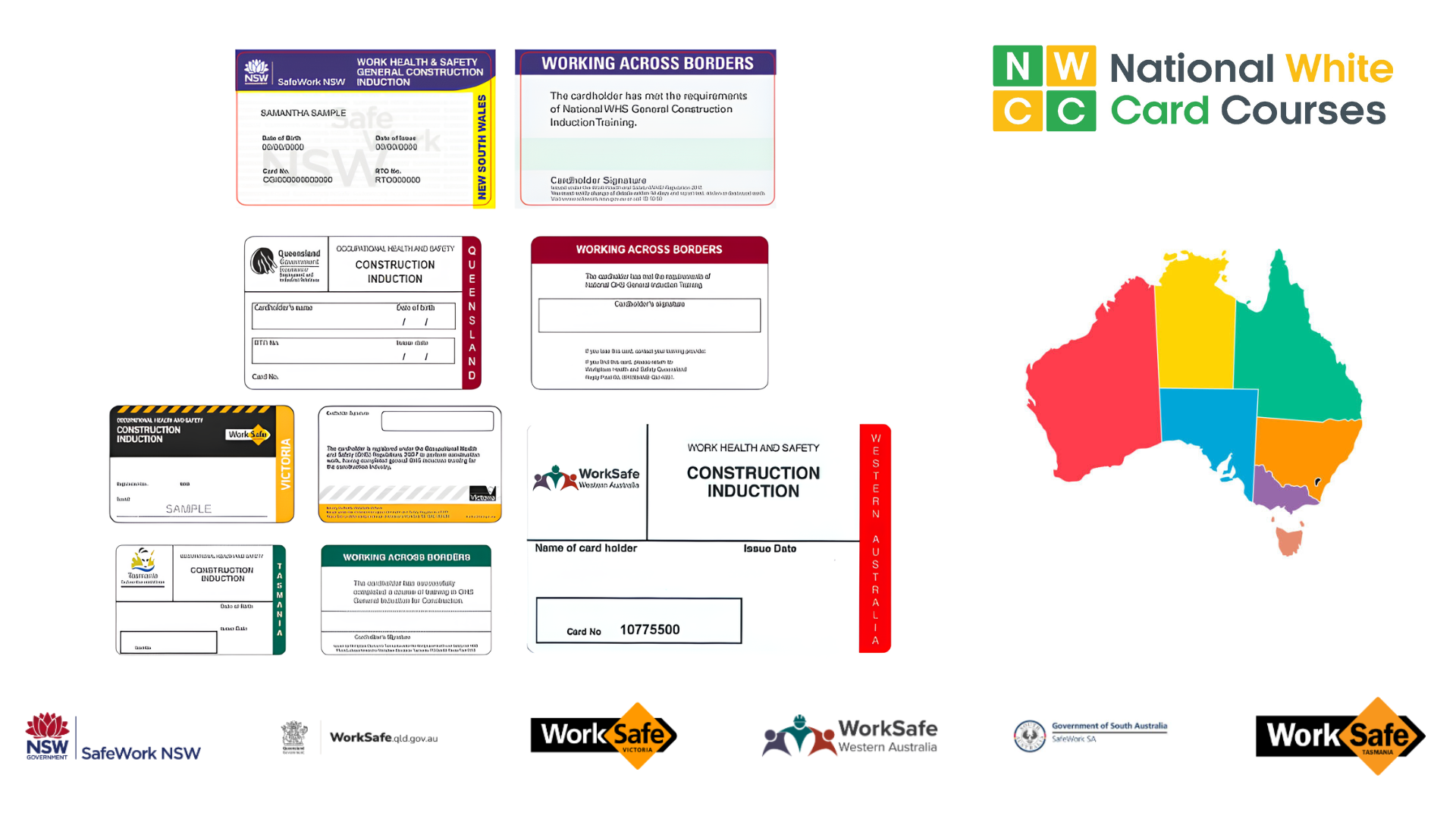
Do old cards still count? Green cards, blue cards, and very early white cards
NSW made use of to issue environment-friendly "WorkCover" cards for building induction. Various other states used different colours: Western Australia and Queensland blue cards, different state‑branded cards prior to the national "white card" system bedded in.
check hereUnder present arrangements, older cards can still stand in NSW if 3 problems are met.
First, the card should have been issued under the then‑approved general construction induction structure. That normally indicates a WorkCover NSW permit, a reputable interstate building and construction induction card, or a very early "white card" referencing an older unit like CPCCOHS1001A.
Second, the card should not be terminated, put on hold, or obviously fraudulent. If the card is damaged, unreadable, or the photo is plainly not you, lots of principal service providers will certainly refuse it although the legislation concentrates on the training, not the plastic.
Third, the 2‑year inactivity rule still uses. A woodworker's white card or old green card from 2008 can still be accepted if that person has actually been continually functioning as a chippy. The exact same card in the hands of a person that left building in 2012 and is currently returning would not satisfy the existing NSW white card expiry rule.
On huge sites, I normally see 3 responses towards old cards:
Major tier‑one professionals frequently have their own inner WHS policies that are tighter than the legal minimum. They might insist on an extra recent card or, a minimum of, durable proof that the employee has continued to be energetic in construction. Smaller service providers are typically more loosened up, focusing generally on whether the card looks legit and the employee appears competent. Government and high‑risk jobs (for instance, entailing asbestos construction websites, tunnelling, or complex plant) often tend to mirror the more stringent end of the spectrum.So lawfully, numerous old cards still count. Practically, you might discover project‑specific guidelines that push you towards a fresh white card course, particularly if your card predates the current CPCWHS1001 requirements.
What if my card is from one more state?
The white card is a national accreditation. A valid card from South Australia, Victoria, Queensland, Western Australia, Tasmania, the ACT or the Northern Region is normally acknowledged in NSW, gave the training fulfilled the national competency.

A few instances from method:
- A South Australian white card (commonly provided after training with a provider in Adelaide, Morphett Vale or Salisbury) is typically approved on NSW sites if the worker has actually remained in construction. A NT white card gotten via a reputable NT training company in Darwin, under CPCWHS1001, is acknowledged in NSW. However, the NT likewise has its very own 60‑day guideline around releasing physical cards after training, so employees relocating interstate demand to manage that timing. A Queensland or WA white card that was done totally on the internet years ago can elevate brows in NSW. A few of those older training courses were criticised for top quality concerns. If the RTO that released the card has since been approved or had its authorization taken out, the card might be rejected.
In my experience, the main friction factors with interstate cards in NSW are:
- uncertainty about whether the training was face‑to‑face or on-line concerns regarding "tick‑and‑flick" RTOs that provided really brief training courses without correct evaluation lack of documents, specifically when trying to verify a card released greater than a years ago
If you are planning to bring a team from interstate right into NSW for building and construction jobs that require a white card, it is worth doing an interior white card check prior to mobilisation. Validate their cards are real, note which RTO issued them, and think about whether a short refresher session on NSW‑specific WHS assumptions would certainly aid, also if it is not legally required.
Does a white card refresher course exist in NSW?
There is no authorities, mandated white card refresher course in NSW at set periods. When you hold the card and continue to be active in construction, you do not have to renew it every 5 years, the way some plant or high‑risk work permits operate.
However, several companies select to treat their labor force as if a refresher course was needed. They might:
- send individuals back with CPCWHS1001 every 5 to one decade; or provide inner safety refresher courses that mirror a lot of the white card course material (for example, updated dirt control for silica, modern hands-on handling practices, brand-new emergency situation treatments, or changes to building site indications obligations)
This is specifically usual in fields that sit on the border of building job, like some mining procedures, movie set building, and huge upkeep shutdowns. Those settings advance swiftly, and site drivers want confidence that everyone's fundamental WHS knowledge is aligned with existing risks.
When your white card may be invalid in NSW
Here is where expiration becomes real. Under NSW rules and typical website technique, your white card is most likely to be dealt with as void if any of the adhering to apply.
- You have not done construction work for 2 or even more years. As an example, you did your Australian white card in 2015, functioned as a labourer for 2 years, after that left for a transportation task and never ever stepped onto a building website once more. If you now want to return under the building construction honor 2020, you would be anticipated to remodel the induction. The card was provided by a non‑approved or discredited RTO. Throughout the "on-line white card" boom, some RTOs cut edges. If SafeWork or one more regulatory authority has actually withdrawn acknowledgment from that RTO, cards they issued can come under a grey location or be rejected outright. The information on the card no more match you. If the name is various to your current lawful name and you can not verify the link, or the photo is plainly not you, site safety might decline entrance. Correction typically involves calling the issuing regulator (for NSW, SafeWork) rather than doing a new course. The card is damaged, unreadable, or obviously modified. Few site supervisors desire the danger of approving a card that has been laminated over, cut down, or covered. From their point of view, it is much safer to demand a replacement card or brand-new training. You have actually been outlawed or limited. In very rare instances where serious WHS breaches happen, regulators can put on hold or cancel authorisations. This is a lot more usual with high‑risk job permits than white cards, however it exists in the background.
Those are useful "expiry" conditions, even though the plastic itself has no printed date.
Can I still do a white card course online?
People search "can I do white card online" regularly, and the answer depends greatly on where you are.
NSW has actually been wary of fully self‑paced online white card courses. The state has actually consistently promoted either face‑to‑face or real‑time virtual distribution, with real-time instructors and authentic evaluation. This involved the front when on-line programs in some other states were so lax that people completed their "training" in under 30 minutes.
Under present NSW setups, if you are getting a NSW white card:
- the training must be supplied by a SafeWork NSW approved RTO you can normally choose either in‑person class distribution or linked real‑time online distribution (for instance, Zoom) where your identification and involvement can be confirmed fully self‑paced "visit whenever, click through some slides, tick a couple of boxes and download your card" choices are not accepted for a NSW‑issued card
If you live near the border or traveling for work, it can be alluring to do a fast online program promoted out of Queensland or WA. Before you turn over your credit card, check whether that training course fulfills your future work demands in NSW. If it does not, you may wind up paying twice.
How long is the white card course, and is it hard?
For many people in NSW, the CPCWHS1001 program is arranged as a complete one‑day session. Reasonably, expect 6 to 8 hours consisting of breaks and assessment. Some RTOs extend it a little if they are collaborating with large group white card training courses or individuals with minimal English, literacy or numeracy.
The program is not academically tough, yet great instructors take it seriously. You will cover:
- legal responsibilities under the WHS Act and Policy common building and construction hazards: falls, electric security construction threats, mobile plant, hazardous substances, dirt on construction sites, noise construction site issues, heat tension building and construction controls, hands-on dealing with construction threats, and even more basic danger monitoring and safe work method statements (SWMS) PPE building and construction website needs, building and construction emergency procedures and typical building website signs
If you do a method white card test or evaluation normal white card concerns and answers in advance, you will certainly have a sense of what to anticipate. The focus is on understanding and applying safety and security concepts, not memorising odd regulations.
People new to building often stress over the analysis. My experience: if you listen, ask inquiries, and think of real website scenarios, you pass. Those who battle are typically distracted, late, or treating the whole point like a tick‑and‑flick exercise.
How to make an application for a NSW white card or redesign an ended one
Whether you are beginning in building, returning after a long break, or trying to satisfy building apprenticeship demands, the fundamental process in NSW is straightforward.
- Create a USI (Unique Student Identifier). Go to the official USI web site and set up your ID. Without a USI, no RTO can provide your statement of accomplishment for CPCWHS1001. Choose an authorized RTO. If you look "white card course Sydney," "white card Campbelltown," "white card Parramatta," or similar, you will certainly find plenty of options. Inspect that the service provider is really approved by SafeWork NSW to supply basic building and construction induction training. Enrol and complete the course. Bring the needed ID, arrive on schedule, and involve with the web content. Whether you do white card face to face or in a real‑time virtual format, you need to finish all analysis tasks. Receive your declaration of attainment. After successful conclusion, the RTO will issue a declaration of achievement for CPCWHS1001 - Prepare to work securely in the building sector. This document is essential; maintain a digital copy. Wait for the card to be released. In NSW, the RTO submits your details to SafeWork, which after that publishes and mails your new south wales white card to your nominated address. Shipment times differ, but many individuals report getting their card within 2 to 4 weeks.
During that waiting duration, some sites will approve your declaration of accomplishment as evidence that you have finished basic construction induction training. Others demand the physical card. If you are aligning work, talk with the site or labour hire business regarding what they will accept.
The price varies. Regular NSW rates sits somewhere in between $120 and $180 for a standard white card course, though team white card training for companies can be less costly per head. If you see rates that look as well excellent to be real, ask more questions regarding distribution mode, instructor experience, and whether the RTO is actually approved.
Replacement cards, shed cards and name changes
Losing your card does not suggest your training goes away. Your hidden competency sits in the training system as a declaration of accomplishment for CPCWHS1001 or its earlier equivalents.
If you lose your NSW card:
- contact the RTO that provided your training. They can typically reissue a copy of your declaration of attainment, and may assist lead you on the next step if the RTO has shut, SafeWork NSW can aid in verifying your document or encouraging on whether a new program is required you can ask for a substitute white card with SafeWork NSW if your original card was issued in NSW and is still valid
If you can not remember who trained you, inspect your email archives, old payslips, human resources files from a previous company, or even call significant training providers in the area where you did the program originally. Several employees are stunned to locate their record still resting securely in a database from a training course completed ten or fifteen years earlier.

When your name modifications, for example after marital relationship, do not wait until a strict website gatehouse refuses you entrance. Contact SafeWork NSW and follow their procedure to update your card, providing identity documents that connect the old name to the new.
White card vs site induction
People sometimes perplex the white card with a site induction. They relate but different.
The white card is basic induction. It covers wide WHS concepts that use throughout building sites in Australia: roles and duties, common risks, risk management, PPE, emergency response.
A website induction specifies to a specific job or workplace. It handles that site's layout, access rules, fire escape, building and construction emergency treatments, plant activities, high‑risk areas, asbestos signs up, and any kind of special controls that go beyond basic legislation.
You demand both. No amount of site‑specific induction can alternative to the nationwide general building induction need. Likewise, a white card alone is inadequate to walk straight right into a high‑risk area on a refinery closure or a significant rail project. Both items of the challenge work together.
How expiration policies influence different roles
The NSW white card expiration settings capture various duties in different ways.
For profession workers, like electricians and plumbing technicians, the main threat is letting a lengthy non‑construction task damage their continuity. An electrical contractor that relocates right into a pure workplace estimating function for a number of years, then goes back to on‑site setup under a building and construction agreement, might discover their card treated as ended even if they maintained their electrical licence current.
For expert duties, such as designers, land surveyors and task managers, the concern is whether they really remained to "perform construction work." A civil engineer that has been in design only, never tipping onto a real-time website, might be more subjected than an associate that regularly conducted website evaluations. In those grey locations, I tend to suggest people to redo the white card course. It eliminates question and freshens their safety and security mindset.
For those on the edges, like shipment vehicle drivers accessing loading bays on construction jobs or realty representatives revealing partly finished apartments, expiry can feel dirty. The safest technique is to think in useful terms: if you white card training south australia are exposed to building and construction dangers, treat yourself as "in construction" and maintain your card. If you have been sitting behind a workdesk for many years, accept that the card has successfully ended and re‑train before stepping back onto site.
Final ideas: old cards under brand-new expectations
NSW white card expiration rules are easy on paper: no printed expiration, but invalid after 2 years far from building. In technique, enforcement is shaped by website plans, the top quality of your original training, and how quickly you can show your ongoing participation in building and construction work.
If you are holding an old card from NSW, SA, the NT, Queensland or somewhere else, ask on your own 3 useful concerns:
- Have I genuinely been energetic in building in the last two years? Was my training supplied by a reliable, authorized provider under the CPCWHS1001 household of units or its acknowledged predecessors? Would I be comfortable explaining my card history and current building and construction experience to a strict security manager at the gate of a significant project?
If the straightforward answer to any one of these is "no," it is time to get white card training once again. A single day of solid, current basic building induction training is a little financial investment compared to the threats of depending on a suspicious or successfully ended card.